
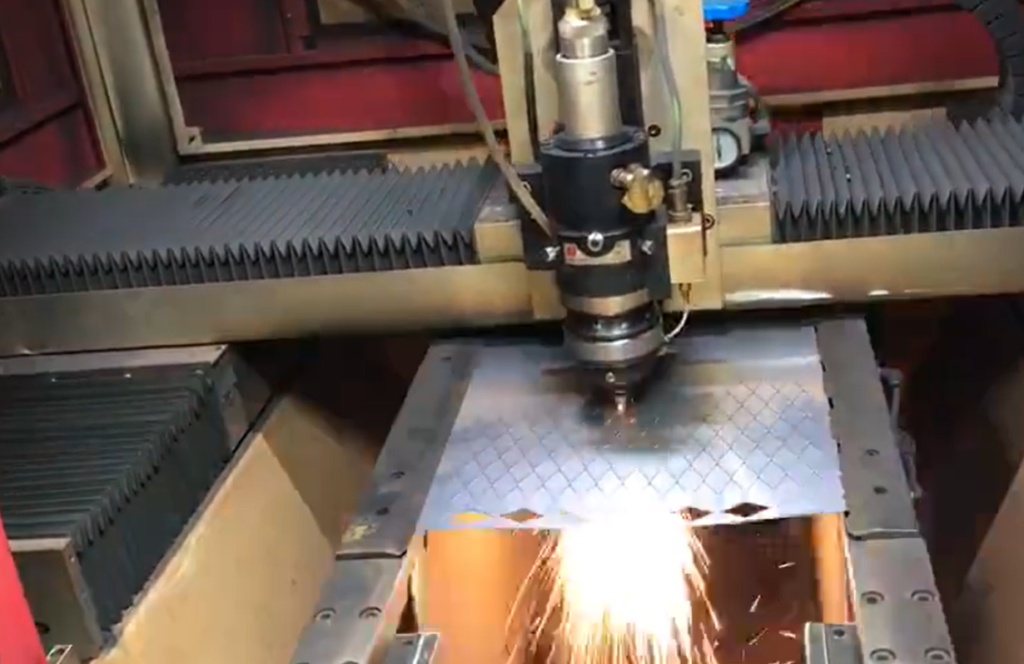
Laser cutting is widely used to produce detailed profiles, decorative patterns, and precise openings in stainless steel jewelry components. For 316L stainless steel jewelry, it offers design flexibility and consistent cutting without the physical contact of a conventional cutting tool.
At J-Focus, selecting the right manufacturing process starts with understanding the design, material thickness, required finish, and production quantity. Laser cutting can be an effective solution for flat jewelry components, but the final result also depends on edge finishing, dimensional control, and subsequent manufacturing steps.
Laser cutting is a thermal cutting process that uses a concentrated laser beam to melt or vaporize material along a programmed path. An assist gas helps remove molten material from the cutting area, creating the required outline or opening.
For stainless steel jewelry production, fiber laser cutting is commonly used for sheet-metal components. The process can follow digital design files to produce shapes that would be difficult or costly to create with conventional cutting methods.
Typical jewelry applications include:
Laser cutting is particularly useful when a design depends on a precise two-dimensional outline. However, it does not automatically create a fully finished jewelry piece. Polishing, deburring, bending, assembly, or other processes may still be required.
The production process generally follows five steps, from design preparation to final inspection.
The process begins with a CAD drawing or digital vector file that defines the component’s outline, openings, and dimensions.
Before production, the design should be reviewed for material thickness, narrow sections, small holes, sharp internal corners, and the distance between adjacent features. These details affect cutting stability and the strength of the finished component.
For custom jewelry, design evaluation is especially important when a pendant includes intricate cutouts or when small connecting sections must remain strong enough for daily wear.
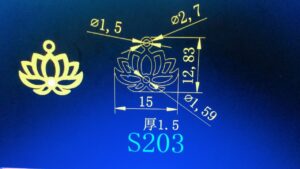
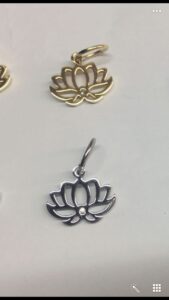
The selected 316L stainless steel sheet is prepared and secured on the cutting machine. Material grade, sheet thickness, flatness, and surface condition should be checked before cutting.
The operator sets the cutting parameters according to the material and geometry. Laser power, cutting speed, focal position, assist gas, and nozzle condition all influence the finished edge.
These settings should be validated for the actual production material rather than copied from another job. Even when two designs use the same stainless steel grade, their thicknesses and geometries may require different settings.
The machine follows the programmed toolpath to cut the component profile and internal features.
The cutting path and sequence matter. Closely spaced openings, small decorative details, and narrow connecting sections can be affected by heat accumulation. Cutting parameters and path planning must balance edge quality, dimensional accuracy, and production efficiency.
After cutting, the parts are removed from the sheet and inspected for burrs, adhered molten material, sharp edges, and visible discoloration.
Depending on the design and required finish, additional processing may include:
Not every component requires the same finishing route. For example, a decorative cutout may need careful edge polishing, while a component with a brushed surface must retain a consistent grain direction.
The finished components should be checked against the approved drawing and sample.
Important inspection points include overall dimensions, hole and slot positions, outline consistency, edge smoothness, flatness, and visible surface defects. Where components must connect with chains, jump rings, or other parts, fit and assembly should also be evaluated.
Acceptable tolerances depend on material thickness, feature geometry, machine capability, and the inspection method. Critical dimensions should be agreed upon before mass production rather than assumed from the CAD file alone.
[图片 4:展示工作人员使用卡尺、测量工具或检验治具检查激光切割后的不锈钢零件。]
Laser cutting can produce detailed stainless steel components, but several technical factors influence the final quality.
Kerf is the width of material removed by the laser beam. Because the beam removes a small amount of material along the cutting path, the programmed outline and finished dimensions are not automatically identical.
The machine’s programming system normally compensates for kerf. For designs with small holes, narrow slots, or closely spaced cutouts, a test piece may be needed to confirm the dimensions before production.
For jewelry components, even a small dimensional variation can affect assembly or the visual balance of a symmetrical design.
Laser cutting introduces localized heat into the material. The area beside the cut may experience thermal changes, and excessive heat input can contribute to discoloration, rough edges, or distortion.
Thin stainless steel parts are particularly sensitive to heat accumulation when many small features are concentrated in a limited area. Appropriate cutting parameters, path planning, and material handling help reduce these risks.
Burrs or adhered material can remain along the cut edge if the process parameters are unsuitable for the material and geometry. A clean-looking cut should not be treated as proof that the component is ready for assembly or wear.
The required level of edge finishing should be defined according to the product’s design, visible surfaces, and intended use.
The stainless steel grade and initial surface condition should be confirmed before production. Scratches, handling marks, and contamination can affect appearance even when the cutting profile is correct.
If the component will receive PVD coating or another surface treatment, the finishing and cleaning steps should be coordinated with the coating requirements. Cutting quality and final surface appearance need to be evaluated as part of the complete production route.
[图片 5:建议展示一组局部细节图,分别呈现切割边缘、精细镂空、表面处理效果。]
Choosing the right process depends on the design, component geometry, tooling requirements, and expected order quantity.
| Process | Best suited for | Main consideration |
|---|---|---|
| Laser Cutting | Flat profiles, openwork designs, detailed outlines, and small-batch development | Edge finishing and heat-related effects must be considered |
| Stamping | Sheet-metal components with repeatable shapes and established production designs | Dies require upfront development and investment |
| Die Casting | Three-dimensional forms, sculpted details, and more complex molded shapes | Mold design, tooling cost, and post-processing affect feasibility |
Laser cutting is often a good starting point for flat components and designs that need flexibility during development. Stamping may become more economical when a suitable design is produced repeatedly in higher volumes. Die casting is generally more appropriate when the component requires a three-dimensional form rather than a flat profile.
These processes are not interchangeable in every application. The best choice should be based on the actual drawing and production requirements, not simply on which process appears more advanced.
[图片 6:建议使用三栏对比图,分别展示真实的激光切割平面零件、冲压件和压铸饰品。图片应来自对应的实际生产工艺。]
Laser cutting may be suitable when a design requires:
It may be less suitable as the only process when a design requires substantial three-dimensional depth, molded contours, or a highly sculpted form. Secondary machining, stamping, casting, or other manufacturing methods may be needed.
For wholesale buyers, the important question is not simply whether a design can be laser cut. It is whether the selected process can deliver the required appearance, quality, and cost consistently across the intended order quantity.
To evaluate a custom 316L stainless steel jewelry project, prepare the following information where available:
If a final drawing is not available, a clear sketch with key dimensions and reference images can help start the discussion. The design can then be evaluated for manufacturability before sampling.
Yes. 316L stainless steel sheet can be laser cut using suitable equipment and process parameters. The achievable feature size, edge quality, and dimensional accuracy depend on material thickness, geometry, and machine capability.
It can. Cutting conditions may produce burrs, adhered material, or roughness along the cut edge. Deburring and polishing may be required, depending on the design and finished product requirements.
Neither process is universally better. Laser cutting offers flexibility for flat profiles and design changes, while stamping can be suitable for repeat production after the necessary tooling has been developed. The right option depends on geometry, volume, and total production cost.
Yes, laser-cut stainless steel components can be prepared for PVD coating. The parts should undergo the appropriate finishing and cleaning steps, and the final appearance should be checked after coating.
A design file or dimensioned drawing, material grade, thickness, quantity, and required surface finish are useful starting points. Mark any critical dimensions and explain whether the project is for sampling or repeat production.
Choosing a manufacturing process early can help reduce unnecessary tooling costs, improve design feasibility, and establish clearer quality expectations.
With more than a decade of experience in stainless steel jewelry, J-Focus works with production partners to evaluate manufacturing requirements and coordinate suitable production solutions for wholesale customers.
Have a design to develop? Contact J-Focus to discuss your drawing, material, finishing requirements, and production quantity.