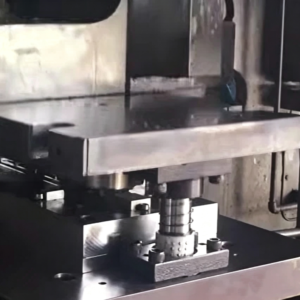

Metal stamping is a manufacturing process that uses a press and custom-made dies to cut or shape stainless steel sheets. It is suitable for jewelry designs that require consistent shapes, clean outlines, and repeatable production.
For 316L stainless steel jewelry, stamping is commonly used for flat pendants, nameplates, decorative tags, cutout designs, and selected formed components.
【在此处插入图片:Stamping Jewelry Manufacturing Process 简易生产流程图】
Recommended flowchart:
2D Design → Die Making → Stamping → Deburring & Polishing → PVD Coating → Quality Inspection → Packing
Note: Drilling, CNC machining, and other secondary operations may be added when required by the design.
The process starts with a technical drawing that defines the jewelry’s shape, dimensions, holes, and decorative details. A 3D drawing may also be needed for designs involving bending or forming.
A custom die is developed based on the approved design. Accurate tooling helps maintain consistent shapes and dimensions during repeat production.
A press applies force through the die to cut or form the stainless steel sheet. Depending on the design, operations may include blanking, piercing, bending, forming, or embossing.
Some designs require extra holes, precise features, or CNC machining after stamping. These are optional operations, depending on the product structure.
Burrs and sharp edges are removed, and the surface is polished to meet the required finish. Proper edge treatment is especially important for jewelry worn against the skin.
When required, the components receive a PVD finish after suitable surface preparation. Other finishing operations may include engraving, enamel application, or stone setting.
Finished pieces are checked for dimensions, edges, surface appearance, and assembly accuracy. Approved products are then packed according to the order requirements.
Stamping works well for jewelry components made primarily from sheet metal, including:
Deep, sculpted, or complex three-dimensional designs may be better suited to investment casting or another manufacturing process. The best choice depends on the design, material thickness, finish, and order quantity.
Tooling cost: Custom dies require an initial investment. For suitable designs with repeat orders, stamping can offer cost advantages over time.
Design feasibility: Small holes, narrow sections, sharp corners, and complex bends should be reviewed before tooling begins.
Surface quality: Stamping does not automatically produce a finished jewelry surface. Deburring, polishing, and any required coating must be included in the production plan.
Order quantity: The expected production volume should be considered when evaluating the tooling investment and unit cost.
Yes. 316L stainless steel sheet can be stamped when the material thickness, tooling, and design are suitable for the process.
No. CNC machining is only needed when additional features or precision are required beyond the stamping operation.
Yes. Suitable stainless steel components can receive a gold-colored PVD finish after surface preparation.
Choosing the right production process early can help manage tooling costs and maintain consistency across repeat orders.
Send J-Focus your design drawing, reference image, or sample to discuss the product structure, finishing requirements, and suitability for stamping.